
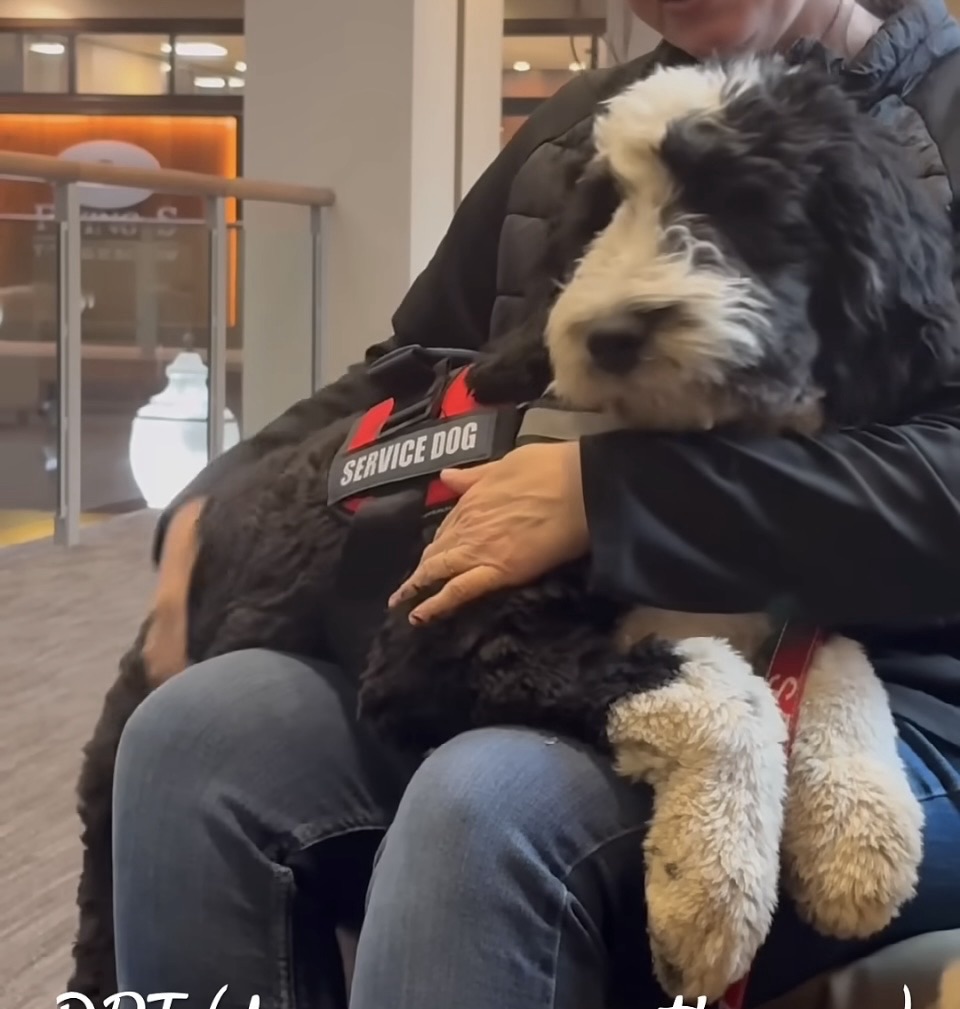

When major depressive disorder or clinical depression severely limits a person’s ability to navigate daily life, standard treatments like medication and talk therapy are sometimes augmented by a powerful, four-legged ally: a Psychiatric Service Dog (PSD).
While many people associate service dogs with physical or visual assistance, these specialized canines are highly trained professionals capable of treating the debilitating psychological and biological symptoms of depression.
Service Dog vs. Emotional Support Animal: The Critical Shift
Before diving into how they help, it is vital to clear up a common point of confusion. A psychiatric service dog is not an Emotional Support Animal (ESA).
4 Tasks a Service Dog Performs for Depression
A psychiatric service dog doesn’t just offer affection; it is trained to identify physiological changes, behavioral cues, and environmental stressors to actively intervene during a depressive episode.
Tactile Stimulation & Interruption
Depression often manifests in physical cycles—such as severe lethargy, frozen states, or repetitive self-harming behaviors (like scratching or rocking). A PSD is trained to spot these behaviors and disrupt them. They might nudge their handler’s hands, place a paw on their lap, or whine slightly to force the handler to shift focus away from a negative spiral and ground themselves in the present moment.
Deep Pressure Therapy (DPT)
When a handler experiences acute panic, severe anxiety, or a crushing wave of depressive chest tightness, a PSD can perform Deep Pressure Therapy.
How it works: The dog uses its body weight to apply pressure to specific pressure points on the owner’s chest or lap—acting like a living, warm, weighted blanket. This physical pressure activates the parasympathetic nervous system, slowing down an elevated heart rate and reducing cortisol (stress hormone) levels.
Routine Enforcement & Medication Reminders
Severe depression can destroy a person’s internal clock and executive functioning, making it difficult to get out of bed or remember basic self-care. A PSD can be trained to recognize a specific alarm and persistently nudge, bark, or paw at their handler until they sit up, take their medication, or go outside for a walk. Because the dog must be cared for, it forces a healthy, outward-focused daily routine.
Creating a “Buffer” in Public Spaces
Crowded environments can induce severe sensory overload or paranoia for someone battling severe mental illness. A service dog can be commanded to perform “block” or “watch my back” maneuvers—standing sideways in front of or behind the handler to create a literal, physical buffer zone between them and strangers.
Leave a Reply